I am a Senior Applications Programmer / Analyst with years of experience developing enterprise solutions using the Microsoft technology stack including C#, VB.NET, ASP.NET, AJAX, IIS and SQL Server.
I specialize in Web application development with a focus on building secure systems, integrating applications, and designing robust database structures.
Rapid Application Development (RAD) offers huge advantages to developers under time constraints looking to get an application released as quickly as possible. Visual Studio 2010’s WebForms is a great environment to use when looking at possible RAD solutions.
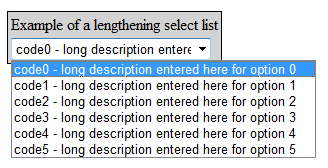
When putting together a Web based form space can be at a premium. Select lists are typically auto-adjusted by your browser to be the length of the longest option in the list.
But that just doesn’t work when space is tight and in many of my forms one doesn’t want the select list to automatically size itself to a length beyond what has been allocated for it, especially if the options are dynamically coming from a database.
To handle this gracefully for all browsers is actually not quite as simple as it seems and requires a bit of JavaScript to work universally.
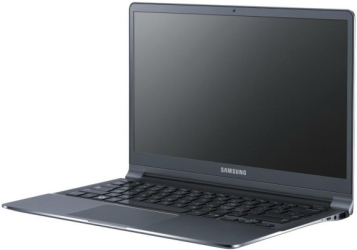
I don’t often write about hardware, but the Samsung Series 9 ultrabook has caught my attention. It’s a nice step up from the existing Samsung Series 5 line of ultrabooks, particularly in the display resolution and CPU horsepower. As well, it stands out from the crowd of ultrabooks currently on the market as a sleek high-end device.
But Back to Basics: What Exactly is an Ultrabook?
Ultrabook laptops are taking off from where the netbooks of yesteryear left off. 2012 is promising to become the year of the ultrabook since the technology behind them has matured to the point where they are a viable alternative to traditional laptops.
What defines an ultrabook? They are light-weight (typically below 4 pounds). This weight is achieved primarily by removing the optical drive (ie: the DVD drive) as well as replacing the traditional hard-disk drive (HDD) with a solid state hard drive (SSD).
These days the loss of an optical drive is not a big deal when one considers their considerable weight. Almost all software and even movies can be bought online these days so the need to have an integrated DVD drive is non-existant.
At this point in time we have what I see as two generations of ultrabooks. The first came out in 2011 and typically sport 1366×768 monitor resolutions along with 128 GB SSD storage. The second generation coming out in Q2 of 2012 has upgraded SSD storage along with resolutions running at 1600×900.

 Justin Cooney